

SEO writing means creating content to rank higher in search engines like Google for relevant keywords. Our goal is to get our content to rank higher on Google for our target keywords.
Search Intent
When someone types a query on Google, they are looking for specific information. The keywords they use show what they want.
For example, if someone types “hotel price in London,” what do you think their intent is? Are they trying to buy a hotel in London, or are they looking for a place to stay and want to know the cost? Most likely, they want to find a place to stay and compare hotel prices.
However, some people might be interested in buying an entire hotel building. For instance, a royal member from Saudi Arabia might be looking to buy a hotel. This shows that the same search query can have different intents based on the region or demographic.
Therefore, we must not only understand the products or services provided on the website, but more importantly, understand the target audience or user group. By understanding these factors, we can ensure that our content meets their needs and is in line with what they are searching for.
Keywords are chosen by content creators to target specific search intents.
Search Queries are generated by users when they look for information.
Search Query
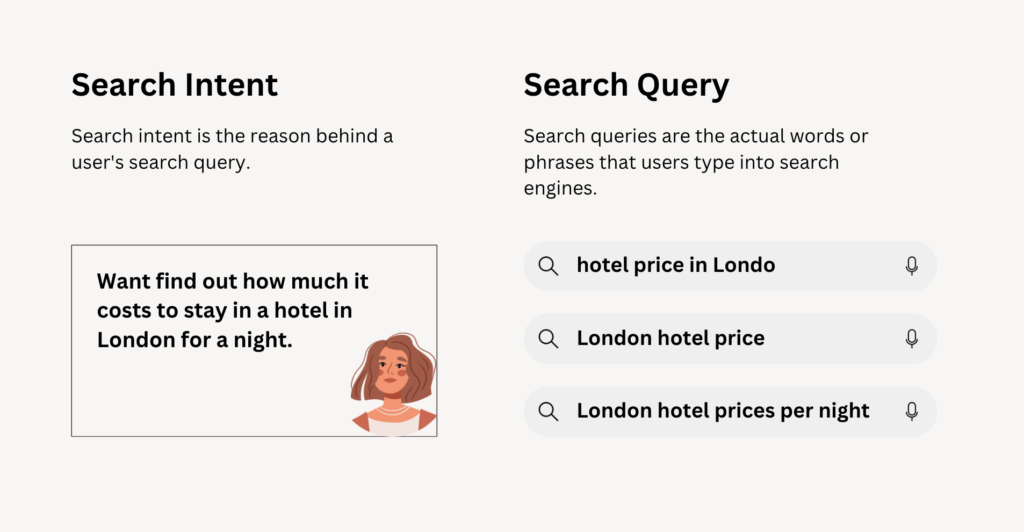
A search query is the exact word or phrase that a person types into a search engine when looking for information.
Target Audience
The target audience is the specific group of people you want to reach with your content, products, or services.
Types of Search Intent
Understanding search intent is crucial for effective SEO writing. There are four main types of search intent:
- Informational Intent: The user is looking for information. This could be a quick answer, a how-to guide, or in-depth knowledge. Examples include “how to bake a cake” or “who is the president of France.”
- Navigational Intent: The user wants to find a specific website or page. They already know where they want to go. Examples include “Facebook login” or “YouTube.”
- Transactional Intent: The user intends to make a purchase or complete a transaction. They are looking for a product or service to buy. Examples include “buy iPhone 13” or “cheap flights to New York.”
- Commercial Investigation: The user is researching products or services and intends to make a purchase soon but hasn’t made a final decision. Examples include “best smartphones 2024” or “top SEO tools.”
Key Entities and Concepts
- The Website
- What is the main purpose of the website?
- Who is the target audience of the website?
- How does the design and style of the website influence the content?
- Products/Services Offered
- What products or services are offered by the website?
- What are the key benefits of these products or services?
- How can these products or services solve the audience’s problems or meet their needs?
- Audience/SEO Persona
- Who is the target audience for this content?
- What are their demographics, interests, and online behaviors?
- What are their needs, challenges, and preferences?
- Keywords/Search Intent
- What keywords are relevant to the content and the audience?
- What is the search intent behind these keywords?
- How can the content match and satisfy this search intent?
- Google/Search Engine
- What ranking factors does Google consider important for this type of content?
- How can the content be optimized for keyword relevance and user experience?
- Are there any SEO best practices or guidelines to follow?
- Competitors
- Who are the main competitors in this space?
- What kind of content are they producing?
- What gaps or opportunities exist to create better content?
Remember, we are writing for people. We optimize our content so search engines understand it better, but we are NOT writing for search engines.